Table of Contents >> Show >> Hide
If your garden is starting to look like it just finished a long, sweaty summer shift, good news: fall is not the end of flower season. In many parts of the United States, it is actually the comeback tour. As temperatures cool, a whole cast of blooms steps in to replace tired petunias, crispy marigolds, and whatever that one hanging basket was supposed to become.
The trick is choosing flowers that actually enjoy cooler weather instead of treating autumn like a personal betrayal. The best fall flowers are the ones that can handle crisp nights, keep their color when summer annuals give up, and make your porch, containers, borders, or entry beds look polished all the way into sweater season.
So if you want a colorful garden this fall, plant these five blooms right now: pansies, garden mums, asters, snapdragons, and sweet alyssum. Together, they cover the whole fall fantasy. You get rich jewel tones, cheerful yellows, soft whites, trailing texture, upright spikes, and enough seasonal charm to make your front walk look suspiciously expensive.
One important note before you start digging: timing depends on your local climate. In general, the sweet spot is when summer’s worst heat is fading but hard freezes are not yet your nightly houseguest. Check your local frost date, your USDA hardiness zone, and the light conditions in your yard so you can plant smart instead of playing roulette with a six-pack of flowers.
Why Fall Is Secretly One of the Best Planting Seasons
Fall gardening has a few unfair advantages. First, the air cools down even while the soil is still warm, which helps many plants settle in without the stress of blazing summer afternoons. Second, moisture usually holds a little better in fall than it does in July, when containers can dry out faster than a joke bomb at Thanksgiving dinner. Third, cool-season flowers often look fresher, brighter, and more refined in autumn light.
Another bonus is visual contrast. Fall is when ornamental grasses turn tawny, shrubs start coloring up, pumpkins appear on porches, and trees begin shifting into reds and golds. Flowers that might seem ordinary in spring can look downright dramatic in October. A purple pansy beside a white pumpkin? Elegant. A mound of bronze mums near blue asters? That is curb appeal with a pulse.
In short, fall gives you a chance to revive beds, refresh containers, and keep your landscape feeling intentional instead of abandoned. And yes, your neighbors will notice.
The 5 Best Blooms to Plant Right Now for Fall Color
1. Pansies: The Cold-Weather Overachievers
Pansies are the reliable stars of fall color. They bloom in almost every shade imaginable, from buttery yellow and creamy white to plum, burgundy, violet, orange, and nearly black. Some have cheerful “faces,” some are velvety and moody, and some look like they were designed by someone who owns eight scarves and says things like “harvest palette.”
What makes pansies so valuable in fall is their cool-weather performance. When many summer flowers are fading, pansies are just getting comfortable. They are especially useful in containers, window boxes, border edges, and front-entry plantings where you want instant color with very little drama.
Plant pansies in a spot with plenty of sun in cooler regions. In warmer fall climates, they can also appreciate some afternoon protection. Use loose, well-drained soil, and do not bury them too deeply. Water them in well after planting and keep the soil evenly moist while the roots establish. Once settled in, they are generally low-fuss and reward even modest care with a surprising amount of bloom power.
Design-wise, pansies are excellent team players. Pair yellow pansies with deep purple varieties for classic autumn contrast. Mix orange and maroon for a warm, pumpkin-adjacent look. Or keep it elegant with white pansies and silver foliage if you want your fall garden to whisper instead of shout.
If you are planting only one fall flower this season, pansies make the strongest case. They are affordable, easy to find, adaptable in beds and pots, and capable of carrying a display long after summer flowers have packed it in.
2. Garden Mums: The Instant Fall Makeover
If pansies are the steady workers, mums are the headline act. Garden mums deliver that classic autumn burst of color people want the second the weather turns crisp. They come in gold, rust, burgundy, purple, white, bronze, red, and orange, which means they can either anchor a sophisticated palette or go full festive porch mode with gourds and corn stalks nearby.
Mums are popular for one very simple reason: they make everything look like fall immediately. One or two large containers of mums at the front door can do the decorative heavy lifting of an entire seasonal refresh. They are especially effective in mass plantings, symmetrical entry displays, and mixed container gardens where you need a rounded mound of color in a hurry.
To get the best from mums, choose healthy plants with lots of buds just starting to show color instead of fully blown flowers already halfway through their performance. Give them full sun, good drainage, and consistent watering. Mums do not enjoy sitting in soggy soil, but they also do not appreciate drying out in a decorative pot while you admire them from inside with coffee.
One thing gardeners often misunderstand is that not all mums are equal in the landscape. Some are grown mainly for temporary seasonal display, while hardy garden mums have a better chance of returning if planted and cared for properly. That said, if you are planting in fall, think of them first as color machines and second as long-term commitments. If they return next year, wonderful. If not, they still earned their keep.
For color combinations, try bronze mums with purple asters, white mums with ornamental grasses, or deep red mums with chartreuse foliage. Mums are bold, so let them be bold.
3. Asters: The Cottage-Garden Charmers of Autumn
Asters are one of the best ways to make a fall garden feel alive rather than merely decorated. Their daisy-like flowers bring texture, movement, and a softer look than the solid color mounds of mums. They bloom in shades of blue, lavender, pink, purple, and white, often with sunny yellow centers that pop beautifully in autumn light.
These flowers are especially useful if you want your fall garden to feel naturalistic, layered, or pollinator-friendly. Asters fit beautifully into perennial borders, mixed beds, and even larger containers. They also pair well with grasses, sedums, and other fall performers because their shape adds contrast without looking stiff.
Most asters perform best in full sun and well-drained soil. Good air circulation is helpful, especially in regions where mildew can be an issue. If you are planting compact varieties in pots, make sure the container drains well and does not stay waterlogged after rain. Asters like moisture, but they do not want to marinate.
What makes asters especially valuable in fall is the mood they create. Mums say, “Look at me.” Asters say, “Yes, but elegantly.” They are less pumpkin-patch and more late-season meadow. If that sounds like your aesthetic, asters deserve a top spot in your fall plan.
Try blue or lavender asters with white pansies for a crisp combination, or pink asters beside deep burgundy foliage for a softer, romantic effect. If your goal is a garden that still looks thoughtful in October and November, asters are a smart move.
4. Snapdragons: Vertical Color with Personality
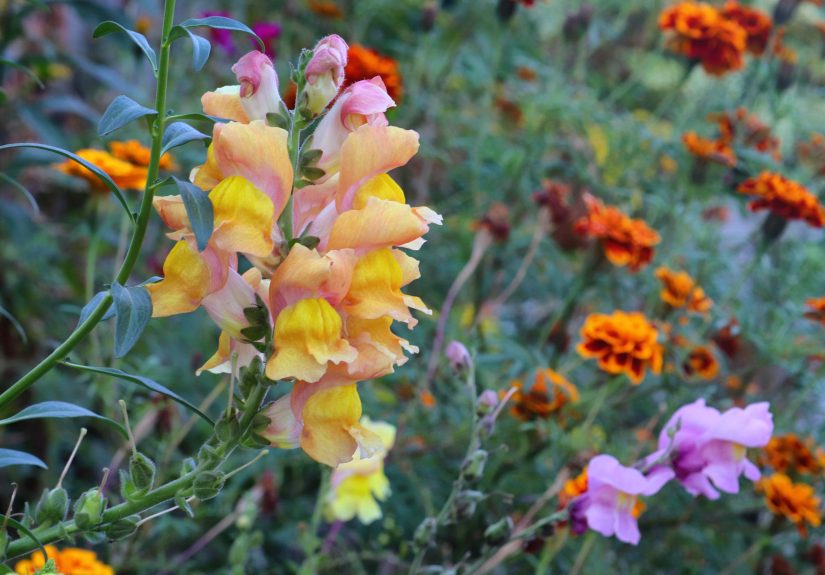
Snapdragons bring something many fall plantings need: height. While pansies, alyssum, and mums tend to mound or spread, snapdragons rise above the mix with upright flower spikes that add structure and a little bit of flair. They bloom in white, yellow, peach, pink, red, orange, and bicolors, so they are easy to work into almost any design.
Fall is a great time to use snapdragons because they are cool-season performers. In fact, they often look happiest when the weather is no longer trying to roast them alive. They are ideal for containers, cutting gardens, front borders, and mixed beds where you want that classic “thriller” shape.
Choose dwarf or medium-height varieties for pots, especially if you are creating a balanced container. Tall types can look wonderful in the ground, but in a container they may start acting like they deserve their own dressing room. Plant them in full sun with moist, well-drained soil and keep up with watering, especially in containers where soil dries faster.
Snapdragons shine when paired with lower, mounding flowers. Think snapdragons in the center or back, pansies around the base, and sweet alyssum spilling over the edge. That simple recipe gives you height, fullness, and softness without making the arrangement feel crowded.
And yes, if you are the kind of person who still pinches the blooms to make the “dragon mouth” open, you are not alone. That is basically required behavior.
5. Sweet Alyssum: The Soft, Fragrant Finisher
Sweet alyssum may not be the loudest flower in the fall garden, but it is often the detail that makes the whole planting work. Its clusters of tiny blooms create a frothy, cloud-like effect in white, pink, lavender, or purple. It also adds a gentle fragrance, which makes it especially appealing near doors, patios, and seating areas.
This flower is a perfect choice for edging containers, lining paths, softening bed borders, and filling gaps between bolder plants. In design terms, alyssum is the peacemaker. It smooths transitions, brightens heavier color palettes, and makes mixed plantings look deliberate instead of like a clearance rack at the garden center.
Sweet alyssum performs best in full sun in cooler conditions, though in hotter areas it can appreciate some relief from the most intense afternoon heat. It likes well-drained soil and regular watering while getting established. In containers, it works beautifully as a spiller, cascading over edges and giving planters that finished, layered look.
If you want a polished fall combination, pair white alyssum with deep purple pansies and bronze mums. If you prefer a softer look, use pink alyssum around lavender asters. It is one of those plants that quietly makes everything else look better, which is a very underrated skill.
How to Plant for the Best Fall Display
To get the most color from these flowers, do not just think about the plant list. Think about placement, scale, and timing. Plant in groups rather than lonely singles. Repetition gives a garden rhythm and makes the color read from a distance. Use upright flowers like snapdragons toward the middle or back of a bed, medium mounds like mums and asters in the center, and lower flowers like pansies and alyssum near edges.
Also pay attention to your light. Most of these flowers perform best with at least several hours of direct sun, especially mums, asters, and snapdragons. A garden bed that looked “bright enough” in summer may be much shadier in fall as the sun angle changes and trees hang onto their leaves. If blooms disappoint, the issue is often less mysterious than it seems. It is usually drainage, sunlight, or timing.
Before planting, freshen your soil with compost or a quality planting mix, especially in containers and raised beds. Water thoroughly after planting, then monitor moisture regularly for the next couple of weeks. Fall is cooler than summer, but wind and dry air can still dehydrate new transplants faster than people expect.
Common Fall Flower Mistakes to Avoid
The first mistake is planting too late. Flowers need time to root in before repeated hard freezes. The second is choosing plants based only on what looks fully blooming at the garden center. A plant covered in open flowers may be lovely today and tired tomorrow. Bud-heavy plants usually give you a longer show.
The third mistake is forgetting that containers dry out faster than in-ground beds. A crisp October breeze can be delightful for you and still mean trouble for a newly planted container. The fourth mistake is overcrowding. Yes, it is tempting. No, twelve mums in one whiskey barrel is not “lush.” It is a future argument over airflow and root space.
Finally, do not ignore your region. A flower that coasts through fall in one state may need more protection in another. Local extension guidance always beats generic optimism.
Real-World Experiences: What Gardeners Notice When They Plant These Flowers in Fall
One of the most common experiences gardeners talk about with fall flowers is how quickly the whole yard changes mood. In summer, it can take weeks for a planting to fill in and start looking good. In fall, the transformation often feels immediate. A pot of pansies by the front steps, two mums on the porch, and a ribbon of sweet alyssum in a window box can make the house look pulled together in one afternoon. It is one of the rare gardening wins that delivers almost instant gratification.
Another thing people notice is that cool-weather flowers often look cleaner and fresher than summer annuals by the time September or October rolls around. Leaves are not as stressed, colors read more clearly, and blooms hold their shape better in cooler air. Pansies in particular have a way of looking cheerful even on gray days. They do not ask for much, yet somehow make the whole garden feel awake again.
Gardeners also learn pretty quickly that fall containers are easier in some ways and trickier in others. You do not usually need to water as often as you do in midsummer, but you still cannot forget completely. A pot tucked under an eave may stay drier than expected, while one out in open rain can stay too wet if drainage is poor. The lesson many people pick up after one season is simple: fall flowers are forgiving, but not psychic. They still need you to pay attention.
Mums bring another familiar experience: they are irresistible at the garden center. People go in for potting soil and come out with three mums, two pumpkins, and a new sense of purpose. Then they get home and realize those mums need sunlight, water, and maybe a slightly larger container than the decorative basket they bought in a moment of seasonal excitement. The good news is that even when gardeners treat mums a little casually, the plants usually still deliver a fantastic burst of color.
Asters tend to surprise people in a different way. They are not always the flashiest plant on the sales bench, but once they settle into a border, they often become the flowers everyone comments on. Their shape feels light and natural, and they bring movement into the garden. On warm fall afternoons, gardeners often notice bees and butterflies visiting them, which adds another layer of life when many summer flowers are already fading.
Snapdragons are often the plant that makes a mixed container feel professionally designed. Without them, a planter can look flat. With them, the arrangement suddenly has height, rhythm, and a focal point. Many gardeners end up using them year after year because they solve a design problem while still being easy to grow.
And then there is sweet alyssum, the flower people do not always plan for but end up loving. Once it starts spilling over the side of a pot or softening the edge of a bed, it becomes obvious why designers use it so often. It is the finishing touch. It softens hard lines, brightens darker flower colors, and adds fragrance in the places where people actually pause, like near a bench, porch, or walkway.
Perhaps the biggest experience gardeners share is this: fall planting feels hopeful. You are not chasing summer abundance anymore. You are editing, refreshing, and making the garden feel beautiful in a calmer, more intentional way. That is part of the charm. Fall flowers are not shouting over the season. They are working with it, and when you choose the right ones, your garden can stay colorful long after everyone assumes the show is over.
Final Thoughts
If your garden needs a second act this year, do not wait for spring. Fall is the perfect moment to bring in flowers that actually like cooler weather and know how to perform when the summer cast is exhausted. Pansies offer nonstop cheer, mums bring instant drama, asters add elegance, snapdragons provide height, and sweet alyssum ties the whole scene together.
Plant them now, match them to your light and climate, and give them the basics they need: good drainage, consistent water, and room to breathe. Do that, and your fall garden will not just survive the season. It will show off.
![18 Best Types of Charts and Graphs for Data Visualization [+ How to Choose]](https://corkopencoffee.org/wp-content/uploads/2026/05/18-best-types-of-charts-and-graphs-for-data-visualization-how-to-choose-qKM1PBYG-thumb.jpg)