Table of Contents >> Show >> Hide
- Why This Question Hits So Hard
- The Childhood Things Many People Miss Most
- 1. Riding a Bike With Nowhere Important To Be
- 2. Playing Outside Until It Got Dark
- 3. Building Forts, Clubhouses, And Tiny Private Worlds
- 4. Reading Just For The Joy Of It
- 5. Making Things Badly And Loving Them Anyway
- 6. Hanging Out With Friends Without Scheduling It Like A Board Meeting
- 7. Being Bored Enough To Get Interesting
- 8. Dancing, Singing, And Being Unselfconscious
- What We Actually Miss: The Feeling Behind The Activity
- How Adults Can Bring Some Of It Back
- Experiences Related To What We Loved As Children And Still Miss Now
- Conclusion
Ask a room full of adults this question and watch what happens. Somebody says, “Riding my bike until the streetlights came on.” Someone else says, “Reading under the covers with a flashlight.” Another person blurts out, “Building forts out of couch cushions like I was an architect with zero permits and maximum confidence.” And then everyone gets that same look: half smile, half ache, fully aware that childhood had its problems, but also had a kind of freedom that adult life often puts in a labeled storage bin and shoves into the attic.
That is part of why this question lands so hard. It is not really about wanting to be eight years old again. Most adults are not begging for math quizzes, mystery rashes, or the emotional roller coaster of losing a pencil case. What we usually miss is the feeling attached to those childhood activities: freedom, curiosity, physical play, imagination, low stakes, and time that did not always have to justify itself with productivity. Childhood fun was often gloriously inefficient. You did not ride a bike to optimize your cardiovascular output. You rode a bike because speed felt magical and a breeze in your face felt like a personality trait.
So what is something people loved doing as children that they miss now? The honest answer is: a lot of small, ordinary things that made life feel big. The better answer is that what we miss most is not always the activity itself, but the state of mind it created. That is good news, because while adulthood comes with bills, inboxes, and the rude audacity of calendar reminders, some of those lost joys can still be reclaimed.
Why This Question Hits So Hard
Childhood memories tend to stick when they are tied to strong emotion, sensory detail, and meaningful connection. That is why adults do not just remember “summer.” They remember the smell of grass after the sprinkler ran, the sound of sneakers slapping pavement, the sticky sweetness of a popsicle melting faster than it could be eaten, and the exact feeling of not knowing what time it was because time was not yet the family CEO.
When people say they miss something from childhood, they are often describing a world with more unstructured play, more spontaneity, and more permission to be absorbed in a moment. There was room for make-believe, aimless wandering, and hobbies pursued simply because they were fun. No one asked for a five-year plan for your cardboard fort. No one wanted a monetization strategy for your sticker collection. It was enough that you cared about it.
That is why seemingly tiny activities can loom so large in memory. They were not tiny when we lived them. They were how we learned to pay attention, connect with others, test our courage, and discover what made us feel alive.
The Childhood Things Many People Miss Most
1. Riding a Bike With Nowhere Important To Be
If there were a Hall of Fame for childhood freedom, bike riding would have its own wing. Few things captured independence quite like pedaling through the neighborhood with a dramatic sense of purpose and absolutely no real destination. Maybe you were headed to a friend’s house. Maybe you were racing the sunset. Maybe you were just doing loops because motion itself felt joyful.
What made it special was not just the bike. It was the combination of movement, fresh air, adventure, and autonomy. As adults, we still move, but often with a goal attached: exercise, commuting, errands, efficiency. Childhood biking felt different. It was transportation, yes, but it was also imagination. Every curb was a challenge. Every hill was a mountain. Every turn felt like a plot twist.
Many adults miss that specific flavor of freedom: being in motion without being chased by a deadline.
2. Playing Outside Until It Got Dark
Tag. Hide-and-seek. Climbing trees. Digging holes for no defensible reason. Catching lightning bugs. Making mud pies that no one should have eaten but everyone respected as culinary art. Outdoor play was chaotic, physical, social, and weird in the best possible way.
What made outdoor childhood play memorable was how open-ended it felt. You could invent games, abandon them, start new ones, and settle playground disputes with the shaky diplomacy of tiny world leaders. The point was not perfection. The point was participation. You learned how to negotiate rules, test limits, and recover from losing without writing a personal manifesto about it.
Adults often miss this kind of outdoor life because it offered two rare gifts at once: energy and ease. It made you feel awake without demanding performance.
3. Building Forts, Clubhouses, And Tiny Private Worlds
There was a deeply satisfying childhood belief that a blanket over two chairs could become a fortress, a spaceship, or an international headquarters for highly important cookie-based negotiations. Kids are geniuses at turning ordinary objects into portals. A cardboard box was never just a box. It was a house, a car, a stage, a rocket, or a castle, depending on the afternoon and the snack situation.
Adults miss fort-building because it represented pure imaginative power. You took the world you had and rearranged it into the world you wanted. That is creativity in its most unfiltered form. No audience. No pressure. No polished result required. Just invention.
And honestly, adulthood could use more of that energy. We have interior design apps and productivity tools, but very few opportunities to declare, “This pillow pile is now an elite research facility.” A tragic cultural loss, frankly.
4. Reading Just For The Joy Of It
For many people, one of the most beloved childhood activities was reading with total immersion. You sprawled on the floor, climbed into bed early with a book, or sat under a blanket with a flashlight feeling like a literary outlaw. Reading then was not always about self-improvement. It was about disappearing into another world.
That is what many adults miss: not just books, but uninterrupted absorption. Childhood reading often happened before every spare minute was chopped into notifications, tabs, errands, and low-level logistical panic. Back then, stories were not competing with fifteen open browser windows and an email marked “gentle reminder” that felt anything but gentle.
Reading for pleasure gave children adventure, empathy, imagination, and comfort. Adults still crave those things. We just often forget that the humble act of reading can still deliver them.
5. Making Things Badly And Loving Them Anyway
Drawing with crayons. Making friendship bracelets. Painting lopsided animals. Building strange Lego structures that looked like a castle designed during an earthquake. Childhood creativity was rarely elegant, and that was part of its charm.
Children often create before they learn to censor themselves. They do not pause every two minutes to wonder whether their paper dragon is marketable or if their glitter-heavy masterpiece fits a personal brand. They make things because making things feels good.
Adults miss this because somewhere along the way, many of us started equating creativity with talent, and talent with perfection. That is a miserable trade. The real loss is not that we stopped producing flawless art. It is that we stopped letting ourselves play.
6. Hanging Out With Friends Without Scheduling It Like A Board Meeting
Childhood friendship often had a beautiful informality to it. You knocked on a door. You yelled someone’s name from outside. You met at the park, the driveway, the basketball hoop, the corner store, or the front steps. It was spontaneous, messy, and wonderfully low-tech.
As adults, friendship usually requires calendars, child care, transportation, weather checks, and the emotional courage to read a message that says, “Let’s definitely do something soon.” We do mean it. It just sometimes takes six to eight business months.
What people miss is not only the friends themselves, but the ease of access. Childhood friendship was woven into daily life. You did not always need a reason to be together. Existing in the same place was reason enough.
7. Being Bored Enough To Get Interesting
This one surprises people, but many adults miss boredom. Not the soul-numbing kind that arrives during a pointless meeting, but the open, floating boredom of childhood. The kind that began with “There is nothing to do” and somehow ended with a homemade obstacle course, an invented game, a comic strip, or a dramatic backyard expedition involving sticks and zero survival skills.
Childhood boredom was often the runway for imagination. It forced the mind to wander, combine ideas, and generate play from nothing. Adult life, by contrast, is excellent at eliminating empty space. The second a quiet moment appears, a phone leaps into the hand like a tiny caffeinated butler.
What we miss is that boredom once made room for surprise.
8. Dancing, Singing, And Being Unselfconscious
Many childhood joys had one thing in common: no one was grading you. You sang loudly, danced badly, acted dramatically, and put on “shows” for unwilling relatives who were drafted as an audience by bloodline. It was performance without perfectionism.
Adults often miss that easy lack of self-consciousness. Children are usually less concerned with appearing cool and more interested in fully inhabiting a moment. They commit. They wiggle with conviction. They lip-sync like rent is due. It is inspiring.
What disappears over time is not the desire to express ourselves. It is the permission. And that may be one of the saddest things adulthood quietly steals.
What We Actually Miss: The Feeling Behind The Activity
When people reflect on the childhood activities they loved, a pattern emerges. They miss freedom. They miss being present. They miss doing things for no practical reason. They miss connection without friction, creativity without judgment, movement without optimization, and time that felt wide instead of sliced into tiny rectangles.
That is why the answer to this question is so emotionally rich. “I miss climbing trees” may really mean “I miss feeling brave in a playful way.” “I miss reading all afternoon” may mean “I miss being fully absorbed in one thing.” “I miss hanging out with neighborhood kids” may mean “I miss belonging without having to arrange it.” The childhood activity matters, but the emotional need beneath it matters even more.
Seen that way, this question stops being just nostalgic and becomes useful. It tells you something about what your current life may be lacking. Maybe you need more play. Maybe you need more friends in your actual physical world. Maybe you need creativity, rest, movement, or wonder. Childhood memories can act like clues, not just souvenirs.
How Adults Can Bring Some Of It Back
Let Fun Be Pointless Again
Not every hobby needs to become a side hustle, a measurable goal, or a personality brand. You can draw badly, garden imperfectly, roller-skate slowly, sing off-key, or read fantasy novels simply because it delights you. Pleasure is a good enough reason. That sentence deserves a parade.
Make Room For Unstructured Time
Many childhood joys happened in the space between obligations. Adults need some of that space, too. Leave a pocket of time unscheduled. Go for a walk without turning it into a performance metric. Sit outside. Wander a bookstore. Let your mind be gloriously under-managed for an hour.
Choose Physical Play You Actually Enjoy
If you loved biking, bike. If you loved swimming, swim. If you miss playground energy, try hiking, dancing, skating, tossing a ball around, or playing a rec sport with zero delusions of becoming famous. Moving your body does not have to feel like punishment with better branding.
Do Something Creative With Your Hands
Paint. Build model kits. Bake from scratch. Crochet lopsided scarves. Make collages. Relearn piano. The goal is not mastery on day one. The goal is participation. Children understand this instinctively. Adults have to relearn it on purpose.
Rebuild Casual Connection
Text a friend and suggest a walk instead of a someday dinner that never happens. Start a monthly board game night. Invite someone to read quietly in the same room, bake cookies, shoot hoops, or listen to music. Shared rituals do not need to be elaborate to matter.
Experiences Related To What We Loved As Children And Still Miss Now
Think about the child who spent all afternoon riding a bike in circles, not because the route was important, but because freedom felt physical. That child did not need a destination to feel happy. The pavement, the wind, the occasional wobble, and the thrill of speed were enough. Many adults miss exactly that sensation: the rare moment when your body and mind are doing the same thing at the same time. No multitasking. No background anxiety. Just motion, balance, and the small miracle of feeling present.
Or consider the kid who built forts from couch cushions and old sheets. The fort itself was usually unstable, dimly lit, and one enthusiastic sneeze away from collapse, yet it felt magnificent. Inside that tiny space, ordinary life became negotiable. A living room turned into a secret base. A flashlight became moonlight. A snack became expedition fuel. Adults often miss these moments because they represented ownership of imagination. You could make a world with what you had, even if what you had was three pillows and questionable engineering.
Then there was reading for pure pleasure. Not reading to improve, not reading to keep up, not reading because a productivity expert said it sharpens your mind before 6 a.m. Just reading because the story had you by the collar. So many people remember lying on the carpet or curling up in bed, completely absorbed, while the rest of the house faded into background noise. That kind of immersion feels rare now. Adult attention is expensive and constantly interrupted. Which is exactly why the memory of childhood reading feels so luxurious.
There are also the social memories: knocking on a friend’s door, hearing “Come outside!” from across the street, joining a game halfway through and somehow understanding the rules by instinct and chaos. Childhood friendship was not always easy, but it was often immediate. You did not need a reservation, a plan, or a three-week lead time. Many adults miss that low-friction togetherness more than they realize.
And maybe the deepest experience people miss is this: being fully yourself before self-consciousness got promoted to middle management. Children often dance before they worry how they look, draw before they judge the result, and dream before they ask whether the dream is practical. That freedom is hard to recover, but not impossible. Every time an adult picks up a sketchbook, takes a bike ride, reads for fun, sings in the kitchen, or spends an afternoon outside for no special reason, a little piece of that child returns. Not as a fantasy. As a reminder. The things we loved then still point toward what nourishes us now.
Conclusion
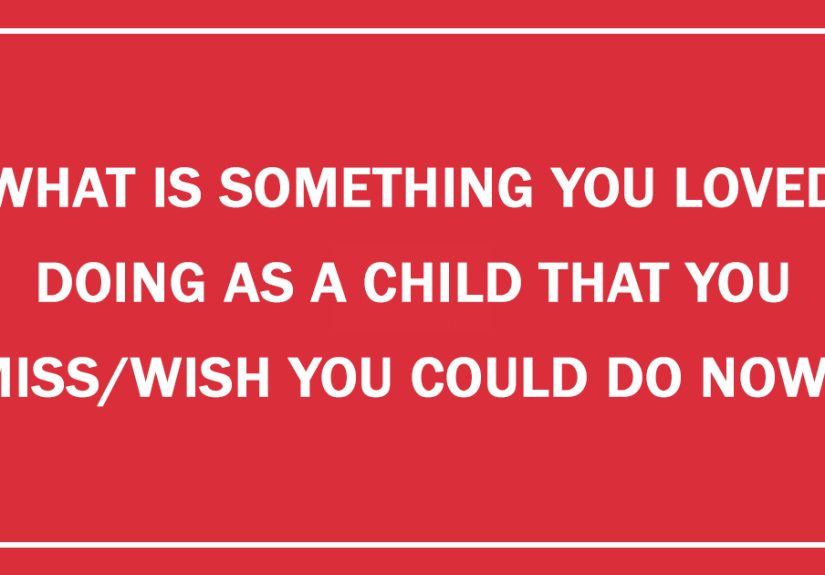
So what is something you loved doing as a child that you miss or wish you could do now? It might be riding a bike, climbing trees, reading under the covers, making forts, drawing weird little creatures, or spending summer evenings outside with friends and no urgent agenda. Whatever your answer is, it probably reveals more than a fond memory. It reveals a hunger for freedom, wonder, connection, creativity, and play.
That does not mean adulthood has ruined everything. It just means adulthood sometimes needs a gentle reminder that joy is not a waste of time. In fact, it may be one of the most useful things we can reclaim. The child version of you was not silly for loving those things. The child version of you was onto something.