Table of Contents >> Show >> Hide
- Why Upgrade Builder Grade Cabinets Instead of Replacing Them?
- Project Overview: What This Cabinet Upgrade Includes
- Tools and Materials You May Need
- Step 1: Inspect the Cabinets Before You Start
- Step 2: Remove Doors, Drawers, and Hardware
- Step 3: Add Trim for a DIY Shaker Cabinet Door Look
- Step 4: Upgrade Cabinet Sides and End Panels
- Step 5: Consider Crown Molding, Risers, or Ceiling Extensions
- Step 6: Clean Like the Paint Depends on It
- Step 7: Sand for Adhesion, Not Destruction
- Step 8: Prime the Cabinets
- Step 9: Paint with a Durable Cabinet Finish
- Step 10: Install New Cabinet Hardware
- Step 11: Reinstall Doors and Adjust Everything
- Common Mistakes to Avoid
- Budget-Friendly Custom Cabinet Ideas
- Real-Life Experience: What I Learned Upgrading Builder Grade Cabinets
- Conclusion
Builder grade cabinets are the beige sweatpants of the kitchen world. They are practical, dependable, and technically doing their job, but nobody walks in and says, “Wow, look at those standard flat cabinet fronts!” The good news? You do not need to gut your kitchen, sell a kidney, or pretend you suddenly enjoy demolition dust in your cereal. With trim, paint, new hardware, and a few smart finishing details, a basic cabinet can look custom without a custom-cabinet price tag.
This builder grade cabinet upgraded tutorial walks you through a realistic DIY cabinet makeover from planning to final touch-up. We will cover how to add simple Shaker-style trim, prep and paint cabinets properly, install modern cabinet hardware, upgrade side panels, and make the whole thing look intentional instead of “weekend project that got spicy.”
The goal is not perfection in a showroom sense. The goal is a durable, attractive, high-impact cabinet upgrade that makes your kitchen, bathroom, laundry room, or mudroom feel finished. Think: less “came with the house,” more “yes, I have opinions about drawer pulls now.”
Why Upgrade Builder Grade Cabinets Instead of Replacing Them?
Replacing cabinets is expensive, messy, and often unnecessary if the cabinet boxes are structurally sound. Many builder grade cabinets have simple doors, plain sides, limited trim, and uninspiring hardware, but the basic framework may still be perfectly usable. That makes them excellent candidates for a DIY cabinet upgrade.
A builder grade cabinet upgrade is especially smart when:
- The cabinet boxes are sturdy and attached securely.
- The layout works for your space.
- The doors are flat, plain, or outdated but not falling apart.
- You want a budget-friendly kitchen cabinet makeover.
- You prefer cosmetic improvement over full renovation chaos.
The most effective upgrades usually combine three things: architectural detail, paint or finish improvement, and better hardware. Trim adds dimension. Paint unifies everything. Hardware gives the cabinet personality. Together, they do what a good haircut, tailored jacket, and decent shoes do for a person: suddenly everything looks planned.
Project Overview: What This Cabinet Upgrade Includes
This tutorial focuses on turning plain cabinet doors into a more custom-looking style using thin wood or MDF trim. You can use the same process on kitchen cabinets, bathroom vanities, laundry cabinets, or built-ins.
Main upgrades in this tutorial
- Add trim to flat cabinet doors for a DIY Shaker cabinet door look.
- Fill old hardware holes if needed.
- Clean, scuff sand, prime, and paint for a durable finish.
- Install new knobs or pulls with consistent placement.
- Upgrade cabinet sides with panel trim or molding.
- Add crown molding, risers, or fillers if the cabinets stop short of the ceiling.
You can complete all of these upgrades or choose only the parts that fit your budget and skill level. Even replacing hardware and painting builder grade cabinets can dramatically change the room. Adding trim takes the transformation further and makes the doors look less flat and more intentional.
Tools and Materials You May Need
Before you begin, gather your supplies. Nothing ruins DIY momentum like realizing you need one more sanding sponge after you are already wearing paint pants and emotional damage.
Tools
- Drill and drill bits
- Measuring tape
- Pencil
- Level
- Miter saw, hand saw, or trim cutter
- Clamps
- Caulk gun
- Putty knife
- Sanding block or orbital sander
- Paintbrush, angled brush, and high-density foam roller
- Cabinet hardware jig or homemade template
Materials
- MDF trim, lattice strips, or thin wood boards
- Wood glue
- Brad nails or pin nails
- Wood filler
- Paintable caulk
- Degreaser or cabinet-safe cleaner
- 120-grit and 220-grit sandpaper
- Bonding primer
- Cabinet-grade enamel paint or trim paint
- New cabinet knobs or pulls
- Painter’s tape and drop cloths
Step 1: Inspect the Cabinets Before You Start
Open every door and drawer. Check whether hinges are loose, shelves are sagging, drawer slides are sticking, or cabinet boxes are pulling away from the wall. A cosmetic upgrade looks best when the cabinet itself works properly.
Tighten loose screws, replace damaged hinges, and repair cracks before you paint. If a cabinet door is warped, trim will not magically make it behave. It may still look like it has a secret. Replace or repair badly damaged doors before adding trim.
Decide your style direction
For a classic look, add Shaker-style trim and paint the cabinets white, warm beige, soft gray-green, navy, or black. For a cottage look, use soft green or cream. For a modern look, choose slab-friendly hardware, simple trim, and a satin or semi-gloss cabinet finish. For a dramatic upgrade, paint lower cabinets a darker color and upper cabinets a lighter shade.
Step 2: Remove Doors, Drawers, and Hardware
Remove cabinet doors and drawer fronts if possible. Label each one with painter’s tape so you know exactly where it goes back. Do not trust your memory here. Your brain will confidently say, “Of course I will remember,” and then betray you while holding a screwdriver.
Place screws and hinges in labeled bags. If you are keeping the hinges, clean them. If you are changing hinge color, consider replacing them rather than painting them. Painted hinges often chip because they move constantly.
If your new pulls match the old hole spacing, you can reuse the holes. If not, fill the old holes with wood filler, let it dry fully, and sand smooth. This is also the time to decide whether you want knobs, pulls, cup pulls, or a mix.
Step 3: Add Trim for a DIY Shaker Cabinet Door Look
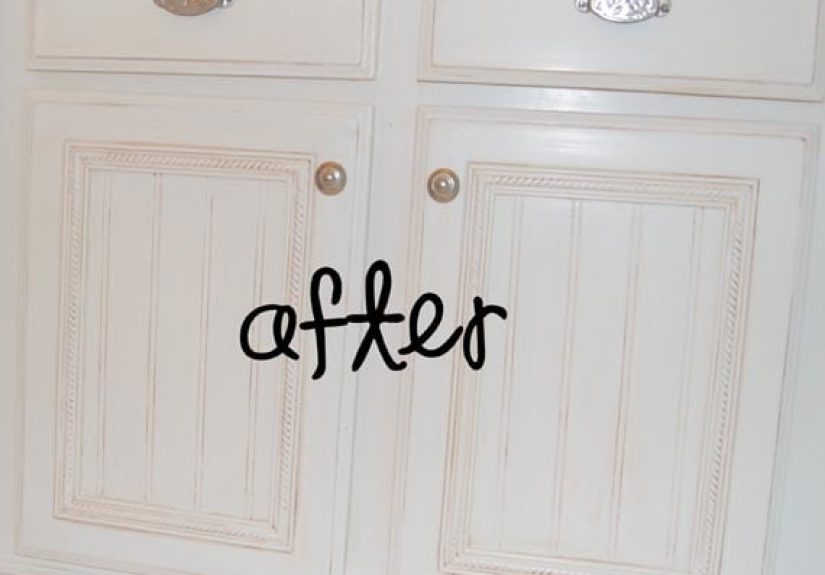
Adding trim is the upgrade that turns a plain builder grade cabinet door into something that looks far more custom. Thin MDF strips are popular because they are affordable, smooth, easy to paint, and available at many home improvement stores. Wood trim also works, especially if you are staining rather than painting.
Measure the door
Measure the width and height of each cabinet door. Decide how wide your trim frame will be. Many DIYers use strips around 2 to 2.5 inches wide for a Shaker-style border, but the best width depends on the door size. Small bathroom vanity doors may look better with narrower trim, while large pantry doors can handle wider rails and stiles.
Cut the trim
Cut two vertical pieces and two horizontal pieces for each door. You can create square butt joints for a simple Shaker look or mitered corners for a more decorative style. Dry-fit everything before gluing. If the pieces look uneven now, they will not become more charming after paint. They will become painted uneven pieces.
Attach the trim
Apply a thin bead of wood glue to the back of each trim piece. Position it carefully, clamp it if needed, and secure it with brad nails or pin nails. Wipe excess glue immediately with a damp cloth. Let the glue dry according to the product directions.
Once dry, fill nail holes and small gaps with wood filler. Caulk the inside seams where trim meets the door panel. Caulk creates a seamless built-in appearance after painting, but use it sparingly. A giant bead of caulk is not craftsmanship; it is frosting for cabinets, and nobody ordered that cake.
Step 4: Upgrade Cabinet Sides and End Panels
Builder grade cabinet sides are often plain, especially at the end of a cabinet run or beside a refrigerator. Adding side panel trim can make the entire cabinet bank look more finished.
Use thin trim to create a rectangle or decorative frame on the exposed side panel. Keep the style consistent with your cabinet doors. For example, if your doors now have Shaker trim, use a simple rectangular frame on the side. Measure carefully, use a level, glue and nail the trim, then fill and caulk before painting.
This small detail matters because the side of a cabinet is often visible from dining rooms, living rooms, and entryways. A plain side panel says “stock cabinet.” A trimmed side panel says “custom feature,” even if you made it while drinking coffee from a mug that says “World’s Okayest DIYer.”
Step 5: Consider Crown Molding, Risers, or Ceiling Extensions
If your upper cabinets stop short of the ceiling, the empty space above them can collect dust, random baskets, and decorative items you bought during a very optimistic shopping trip. Closing that gap can make builder grade cabinets look taller and more built-in.
There are several ways to do it:
- Add crown molding: A classic option for cabinets close to the ceiling.
- Build a riser: Add a box or face frame above the cabinets, then attach crown molding.
- Stack small cabinets: Add shorter cabinets above the existing uppers for more storage.
- Use fillers and scribe molding: Fill gaps where cabinets meet walls or ceilings.
For most DIY homeowners, a riser plus crown molding offers a strong visual upgrade without replacing the cabinets. Make sure anything added above the cabinets is securely attached to studs or the cabinet frames. Use a level often. The ceiling may not be perfectly straight, because houses enjoy having secrets.
Step 6: Clean Like the Paint Depends on It
Paint failure usually begins before the paint can is even opened. Kitchen cabinets collect grease, dust, fingerprints, cooking residue, and mystery grime. If you paint over that, the finish may peel, chip, or look uneven.
Clean every surface with a degreaser or cabinet-safe cleaner. Pay attention to corners, around handles, and the upper edges of doors. Rinse if the cleaner requires it, then let everything dry completely. Paint and moisture are not friends.
This step is not glamorous, but it is one of the biggest differences between a cabinet makeover that lasts and one that starts peeling before your next grocery run.
Step 7: Sand for Adhesion, Not Destruction
You do not usually need to sand cabinets down to bare wood. The goal is to scuff the surface so primer can grip. Use 120-grit sandpaper for glossy or factory-finished surfaces, then smooth with finer grit if needed. For detailed areas, use a sanding sponge.
After sanding, vacuum the dust and wipe the surface with a microfiber cloth or tack cloth. Dust left behind will create bumps in the finish. Those bumps will be tiny, but you will see them forever because DIY projects give us supervision-level eyesight.
Step 8: Prime the Cabinets
Primer helps paint bond to the cabinet surface and improves durability. For slick builder grade finishes, laminate, or previously painted cabinets, choose a bonding primer. For stained wood or cabinets with tannin bleed, use a stain-blocking primer.
Apply primer with an angled brush in corners and detailed trim areas. Use a mini foam roller on flat sections. Do not overload the brush or roller. Thin, even coats dry better and create fewer drips.
Once primer dries, lightly sand with 220-grit sandpaper. This step smooths raised grain, brush marks, and tiny imperfections. Wipe away all dust before painting.
Step 9: Paint with a Durable Cabinet Finish
Cabinets take daily abuse. They are touched, bumped, wiped, slammed, and occasionally attacked by spaghetti sauce. Use a durable cabinet-grade enamel, alkyd enamel, urethane trim enamel, or high-quality trim paint designed for hard-wearing surfaces.
Start with an angled brush on trim, corners, and recessed areas. Then use a mini roller on the flat surfaces while the brushed paint is still wet. This helps blend the texture. Work in thin coats and watch for drips along edges.
How many coats do you need?
Most cabinet projects need one coat of primer and two coats of paint. Dark colors over light primer may need extra attention for even coverage. Light colors over dark wood may need a stain-blocking primer and possibly an additional paint coat.
Let each coat dry according to the paint manufacturer’s directions. More importantly, allow the finish to cure before heavy use. Dry means you can touch it. Cured means it is harder and more resistant to scratches. These are not the same thing, just like “I cleaned the kitchen” and “I moved everything into one drawer” are not the same thing.
Step 10: Install New Cabinet Hardware
Hardware is the jewelry of a cabinet makeover. It can make simple doors look modern, classic, farmhouse, traditional, or sleek. Choose hardware that fits the style of your kitchen and the scale of your doors and drawers.
Measure center-to-center spacing for pulls, especially if you are using existing holes. Common pull spreads include 3 inches, 3.75 inches, and 5 inches, but larger drawers may look better with longer pulls. For knobs, placement is usually measured from the corner or edge of the door.
Use a hardware jig or make a template from cardboard. Mark carefully, drill pilot holes, and check alignment before attaching the hardware. Tighten screws securely, but do not overtighten. Cracked cabinet fronts are not a design feature.
Step 11: Reinstall Doors and Adjust Everything
Once the paint has dried enough for handling, reinstall the doors and drawer fronts. Work from your labels so each piece returns to its original spot. Adjust hinges so gaps look even. Install bumpers to protect the new paint from repeated contact.
If you want a functional upgrade, consider adding soft-close adapters, concealed hinges, or pull-out shelves. These upgrades do not just make cabinets prettier; they make them easier to live with. Soft-close doors also reduce the sound of cabinet slams, which is excellent if your household includes snack enthusiasts with dramatic closing techniques.
Common Mistakes to Avoid
Skipping prep
Cleaning, sanding, and priming are not optional if you want a lasting finish. Paint needs a clean, dull, stable surface.
Using wall paint
Wall paint is not designed for cabinet abuse. Choose a harder, cabinet-friendly finish.
Painting thick coats
Thick paint looks faster at first, then dries slowly, drips, and leaves texture. Thin coats win.
Rushing reassembly
Fresh paint can dent or stick if doors are reinstalled too soon. Give it time.
Ignoring hardware scale
Tiny knobs on huge drawers can look awkward. Oversized pulls on small doors can look like gym equipment. Balance matters.
Budget-Friendly Custom Cabinet Ideas
If you want to take your builder grade cabinet upgrade further, try one or two of these affordable ideas:
- Add under-cabinet lighting for function and atmosphere.
- Install glass inserts in a few upper cabinet doors.
- Add peel-and-stick wallpaper or beadboard inside open cabinets.
- Use decorative end panels on exposed cabinet sides.
- Paint the island a contrasting color.
- Add toe-kick trim for a furniture-style look.
- Replace visible hinges with concealed hinges if compatible.
The secret is consistency. One random upgrade may look accidental. Repeating trim style, paint color, and hardware finish across the room makes the project look designed.
Real-Life Experience: What I Learned Upgrading Builder Grade Cabinets
Here is the honest truth about a DIY builder grade cabinet makeover: the work is not technically impossible, but it does require patience. The most difficult part is not cutting trim or rolling paint. It is resisting the urge to rush. Cabinets have a lot of surfaces, edges, corners, and small details. Every shortcut shows up later wearing a tiny neon sign.
One of the biggest lessons is that labeling doors is not a cute organizational extra. It is survival. Cabinet doors that look identical may have slightly different hinge positions, tiny alignment differences, or small quirks from the original installation. When everything is painted and stacked in the garage, guessing where each door belongs becomes a home improvement game show nobody wants to win.
Another experience worth mentioning is how much trim changes the feel of the cabinets before paint even goes on. Plain cabinet doors can look flat and temporary, but once the trim is attached, the entire kitchen starts to feel more architectural. At that stage, it may still look messy because of wood filler, caulk, and sanding dust, but the shape is there. That is the point where motivation usually comes back.
Paint color also behaves differently on cabinets than it does on a small sample card. A warm white can look creamy and soft in the morning, then slightly yellow at night under warm bulbs. A navy can look elegant in daylight and almost black in a dim kitchen. Always test paint on a spare board or the back of a cabinet door. Look at it during the day and evening before committing. Paint regret is real, and it usually appears right after the second coat.
The hardware stage is surprisingly satisfying. After days of prep, sanding, priming, painting, waiting, and whispering encouraging words to cabinet doors, installing knobs or pulls feels like the project finally gets dressed. A simple brushed brass pull, matte black knob, polished nickel handle, or bronze cup pull can completely change the mood. Use a jig if possible. Even a tiny alignment mistake becomes very obvious when repeated across ten drawers.
The most underrated part of the project is drying and curing time. Cabinets may feel dry after a few hours, but the finish can still be soft. If doors are closed too soon, paint can stick where surfaces touch. If hardware is tightened too aggressively, it can dent the fresh finish. Giving the cabinets extra time before full use is boring, but it protects all the work you just did.
Finally, expect a few imperfections. There may be a tiny brush mark in one corner, a slightly uneven caulk line, or a dust speck that somehow survived every cleaning attempt like a villain in a sequel. Most guests will never notice. They will see the bigger transformation: brighter cabinets, cleaner lines, updated hardware, and a room that feels more finished. The best DIY cabinet upgrade is not the one with zero flaws. It is the one that improves your home, fits your budget, and makes you smile when you walk into the room.
Conclusion
Upgrading builder grade cabinets is one of the most rewarding DIY projects because it delivers a major visual change without requiring a full renovation. By adding trim, improving exposed panels, cleaning and sanding properly, using quality primer and cabinet paint, and installing well-measured hardware, you can transform basic cabinets into a custom-looking feature.
The process takes time, but every step has a purpose. Trim adds depth. Primer improves adhesion. Paint creates unity. Hardware adds style. Small finishing details, such as caulked seams, filled holes, soft-close features, and crown molding, make the final result feel polished instead of patched together.
So yes, builder grade cabinets can be upgraded. They can be charming. They can even become the part of the room you proudly point to while saying, “I did that.” Just be warned: once you upgrade one cabinet, you may start looking at every plain surface in your house like it owes you a makeover.